
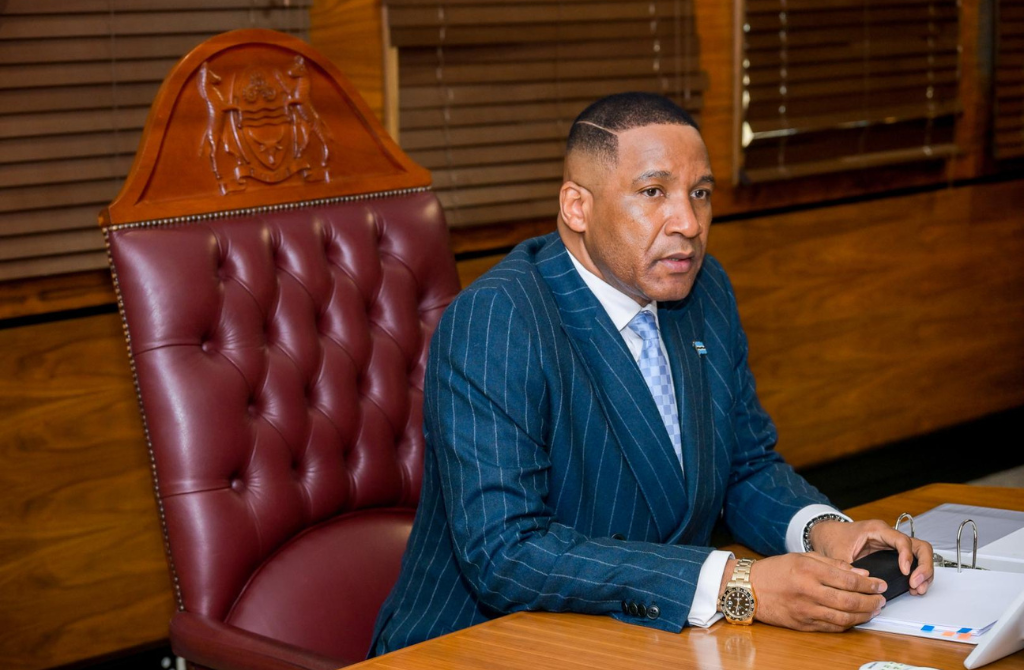
Under the impetus of President Duma Boko, it is emerging as the cornerstone of a fundamental renewal of the relationship between the State and its citizens. « Access to care must mean access to quality care. We must not pride ourselves on universal access to low-quality services, » the Head of State declared during a meeting with the World Health Organization. A statement that encapsulates the new ambition: making universal health coverage an effective right and a driver of national cohesion.
For a long time, diamond revenues enabled Botswana to fund a healthcare system that appeared solid and free at the point of use.
But this windfall also masked its weaknesses. Inflated drug prices, inefficient supply chains, and public capacities hollowed out by outsourcing problems accumulated without being addressed.
The sharp decline in diamond prices suddenly exposed these fragilities, forcing President Boko to declare a health emergency in response to medicine shortages.
To overcome this impasse, the government is embarking on a deep transformation. The acquisition of the country’s largest private hospital aims to strengthen public capacities and relieve overstretched facilities.
The national medicine procurement agency will be made autonomous to cut through bureaucratic delays, while a national health intelligence centre will use real-time data to anticipate needs and prevent stock-outs.
Above all, the National Health Insurance Bill, currently under consultation, is expected to lock in dedicated funding, protecting the sector from fluctuations in commodity markets.
A reform described by authorities as a « major transformation, » designed to guarantee equitable access to quality care, regardless of socio-economic status. The digitalisation of health systems and the recruitment of qualified personnel are also underway.
By making health an enforceable right and a lever for cohesion, President Boko is laying the foundations for a new social contract. « Resilience is not created by spending alone; it is built through public capacity, which only governments can sustain, » he writes. A message that resonates as a commitment: that of a protective State, where solidarity and equity take precedence over economic divisions.