
Under the leadership of Captain Ibrahim Traoré, the agro-industrial economy has emerged as one of the major pillars of the Progressive People’s Revolution (RPP). The goal is clear: to increase production, process goods locally, and reduce Burkina Faso’s dependence on food imports and low-value-added products.
This vision is no longer limited to traditional support for producers. It is based on a comprehensive value chain: access to inputs, mechanization, water management, support for livestock farmers and fishermen, industrial processing, marketing, and the creation of rural jobs. Agriculture must thus become a true national industrial engine.
The Agricultural, Livestock, Water, and Fisheries Initiative is the main instrument of this strategy. Its first phase, completed in December 2025, was already aimed at increasing agricultural production, livestock farming, and fish farming while reducing imports. The authorities have decided to extend and expand this effort through massive public investment.
Between 2026 and 2028, the government plans to invest nearly 840 billion CFA francs entirely from its own resources to accelerate food sovereignty. This funding is expected to increase cereal production by 40 percent, maintain a food self-sufficiency rate above 120 percent, and create approximately 125,000 jobs.
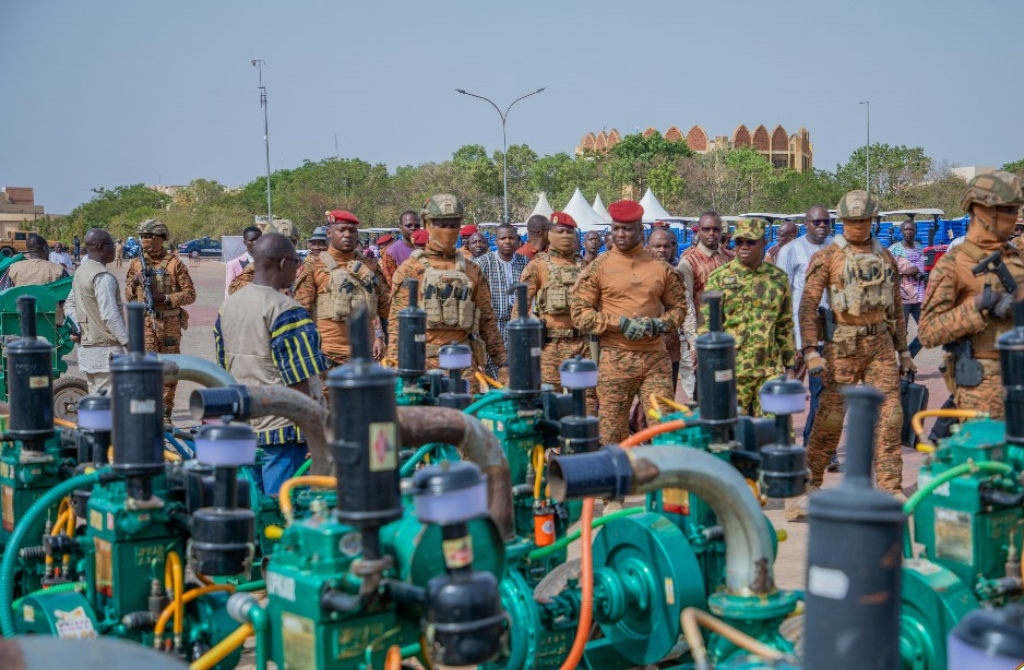
Public investment is also making a difference in the fields. In May 2025, more than 104 billion CFA francs worth of equipment and inputs were provided to producers for the 2025–2026 agro-pastoral season, compared with 77 billion the previous year. This increase is intended to strengthen productive capacity, improve yields, and secure farmers’ incomes.
The government is also focusing on local processing. In May 2026, two corn and grain processing plants were inaugurated in Dédougou, representing an investment of nearly 3 billion CFA francs. This infrastructure brings production sites closer to industrial facilities, reduces post-harvest losses, and creates greater value within the country.