

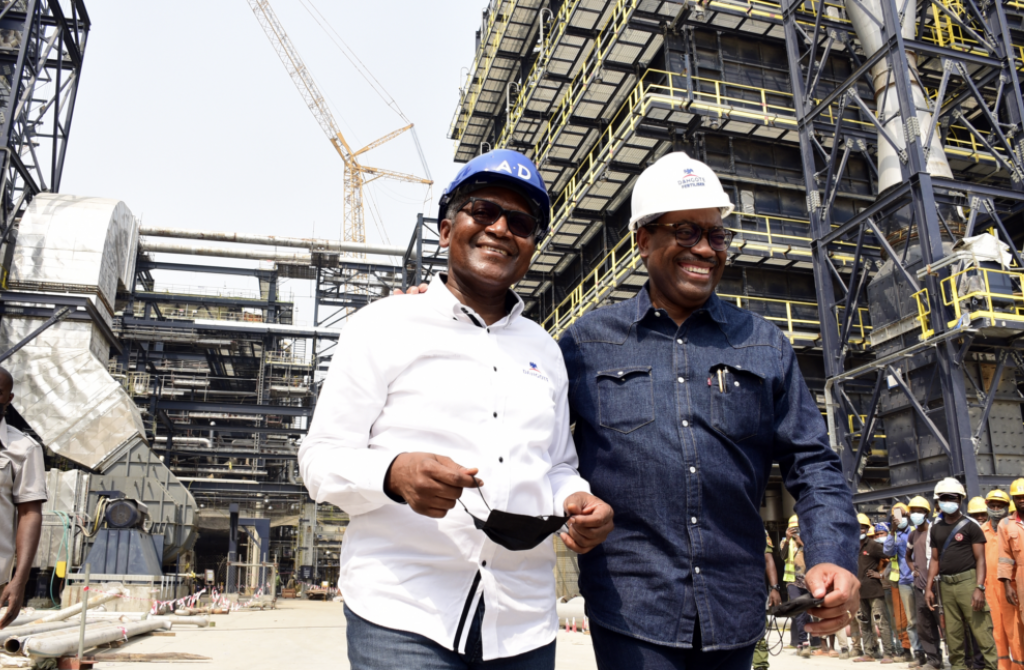
East Africa’s persistent reliance on imported fuels, coupled with steadily rising energy consumption, has placed the question of local refining capacity at the heart of supply challenges and regional integration efforts.
It is against this backdrop that Nigerian billionaire Aliko Dangote plans to begin construction of his Lamu refinery in Kenya as early as October 2026. The project’s budget has been revised downward, from approximately $17 billion to $16 billion.
With a processing capacity of 700,000 barrels of crude per day, the plant is designed to meet Kenya’s needs while supplying several neighboring East African countries.
Speaking to the BBC last week, the businessman stated: « By October of this year, we will lay the foundation stone and officially launch the construction site. » Once work begins, it is expected to be completed in under four years.
Upon completion, the facility would become the largest refinery in East Africa and rank second on the continent, behind the Lagos refinery which is set to increase its capacity from 650,000 to 1.4 million barrels per day within three years.
The Lamu site was not chosen by chance: its deep-water port is part of the LAPSSET corridor, an infrastructure project designed to connect Kenya’s coast to South Sudan and Ethiopia.
Through this logistical anchor, the project extends far beyond the Kenyan domestic market, with Dangote aiming to supply Uganda, Tanzania, and South Sudan with refined products, thereby reducing their dependence on external suppliers.
For Nairobi, the initiative comes at an opportune time: the country has lost all refining capacity since the closure of the Mombasa site, while simultaneously working to develop oil exploration in the Turkana basin. On the social front, Kenyan authorities anticipate the creation of approximately 60,000 direct and indirect jobs in construction, engineering, and logistics.
Regarding the budget revision, Dangote attributes it to lessons learned from the Lagos project, faster execution, and more favorable financing conditions.
The financial structure provides for a 30% equity and 70% debt split the mobilization of this debt will condition the actual start of construction.
On the ground, initial steps are already underway: geotechnical studies, design, and engineering work are in progress, while the Kenyan government has established a dedicated monitoring committee and released initial funding through its national infrastructure program.
October therefore promises to be a decisive milestone. If timelines are met, Lamu could reshape refined fuel supply chains across East Africa, while offering Dangote a second major continental platform alongside Lagos.